
 LookPlan
AI Hairstyle Preview & Personalized Report Sample
Compare the original photo with the new hairstyle, then see how to achieve and maintain the look.
Part 1 of 3 · Contrast
Your photo and the improved look
 Loading image…
 Loading image…
AI-generated preview
Your request
Noticeable · Medium · Specify: warm brown · Work · Simple
Matches your request?
Partly met
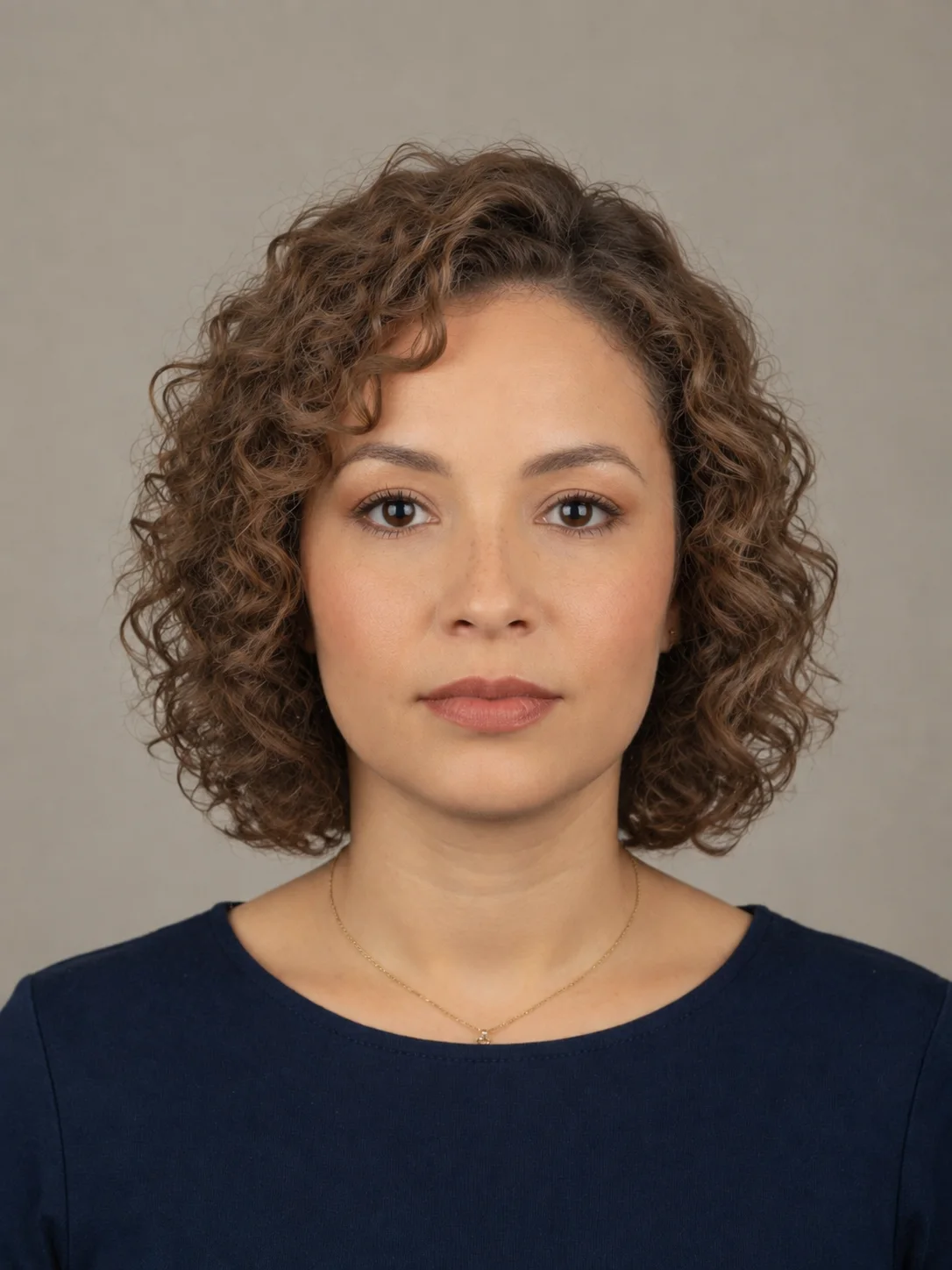
The effect photo demonstrates the requested warm brown tone and a polished medium length suitable for work with simple maintenance. However, because the original hair ends sit at mid-neck level, achieving the target baseline at the base of the neck requires a growth period or extensions.
- Reaching the base-of-neck length shown in the effect photo requires several months of growing out current layers.
- Transitioning from light blonde tones to a warm brown shade requires a color deposit service and ongoing color care to prevent fading.
Applied
Start here. These are the first moves this week — what this After already changed. The groups above are the full map; do these first.
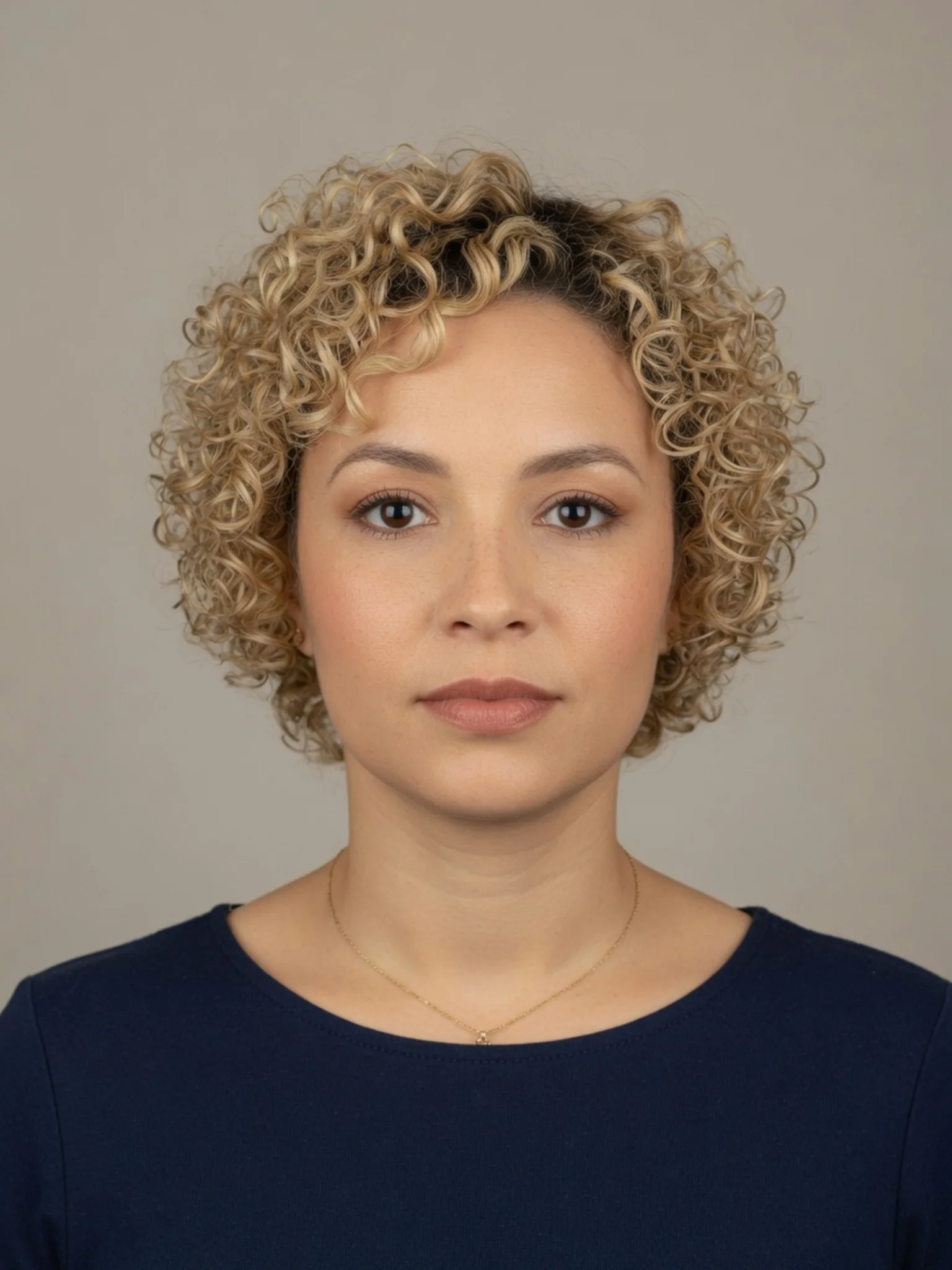
- Overall Length and PerimeterThe lowest visible hair ends extend from mid-neck level down toward the base of the neck above the shoulders, creating an elongated curly bob silhouette.
- Color ToneThe visible hair color shifts from light golden blonde tones to an even, warm medium brown tone.
- Parting and Forehead FramingThe cropped forehead fringe is replaced with a defined side parting, sweeping curls across the upper forehead and opening up the temple area.
- Volume DistributionLateral curl volume shifts slightly lower, placing fullness around the jawline and neck rather than concentrating exclusively around the cheekbones.
Part 2 of 3 · Now
What the analysis found
What already works
The original cut showcases well-defined natural curl pattern, balanced height at the crown, and a neatly rounded frame around the cheeks and jaw.
What the new look changes
The effect photo establishes a balanced, elongated silhouette at the base of the neck with an asymmetrical side part and cohesive warm brown tone.
Do these first
- Consult a colorist to discuss depositing a warm brown tone over the existing blonde shade.
- Establish a grow-out plan to let mid-neck ends reach the base of the neck without cutting the perimeter short.
- Practice shifting the front parting to an off-center angle while front pieces gain length.
Length & outline
In the original photo, the lowest visible hair ends sit at mid-neck level, well above the shoulders. The perimeter forms a rounded, spherical outline that frames the face evenly, with the width at the cheeks and temples matching the overall height, while the forehead and jaw taper softly.
A lower baseline extending toward the base of the neck can provide a vertical drop that visually balances the width across the cheeks and jaw.
Fringe & parting
The front hairline features short, tight curly tendrils falling across the upper forehead with no distinct parting line visible.
Introducing an off-center or side parting allows one side of the forehead to remain open, altering the vertical proportions above the eyebrows.
Texture & volume
The hair shows tight, defined curl coils with uniform spring and lateral volume distributed symmetrically around the forehead, temples, and cheekbones.
Adjusting the internal layering can allow the curl clusters to settle lower along the jaw and neck, distributing bulk more softly downward.
Color & contrast
The visible color displays light golden blonde tones across the lengths with visibly deeper, darker roots near the scalp.
Transitioning to a uniform warm brown tone provides deeper contrast against the skin while meeting the specified color preference.
Upkeep & occasion
The short rounded curl shape requires regular trimming to maintain its compact contour and consistent moisture styling for coil definition.
A medium-length cut at the base of the neck retains simple wash-and-diffuse styling suitable for professional work settings while offering versatile wear.
Part 3 of 3 · Next
What to do next
Length & outline
Must do
- Grow hair lengths until the lowest perimeter ends reach the base of the neck just above the shoulders.
- Establish a softly layered perimeter that maintains curl density around the jaw and collar area.
Avoid
- Cutting blunt horizontal perimeters that cause a triangular expansion at the neck.
Fringe & parting
Must do
- Part the hair off-center to allow curls to sweep diagonally across the hairline.
- Lengthen the front fringe sections to blend directly into the side layers.
Avoid
- Trimming tight, cropped bangs straight across the center of the forehead.
Texture & volume
Must do
- Incorporate light, fluid interior layers to encourage definition without removing perimeter weight.
- Diffuse or air-dry with a curl cream to support natural coil bounce and softness.
Avoid
- Over-thinning or razor-cutting tight curls, which can disrupt coil grouping and create frizz.
Color & contrast
Must do
- Formulate a rich, warm medium brown single-process deposit across all strands to achieve tonal uniformity.
Avoid
- Applying ash-based dark tones that strip warmth from the visible complexion.
Upkeep & occasion
Must do
- Adopt a simple wash-and-go curl routine suitable for daily work environments.
- Schedule maintenance dustings every 8 to 10 weeks while growing toward the base of the neck.
Avoid
- Using complex multi-step daily heat-styling routines.
Tell your stylist
- A grow-out reshaping plan toward a medium curly bob with the lowest ends reaching the base of the neck above the shoulders.
- Long internal curl layers that support bounce without creating excessive width at the cheekbones.
- A side-parted front fringe section that sweeps naturally to the side.
- An all-over warm medium brown color application.
Confirm with your stylist
- Confirm prior chemical and lightening history before applying any new warm brown hair color.
- Assess curl shrinkage to determine the precise dry-cutting perimeter needed to reach the base of the neck.